

The ending sucked.
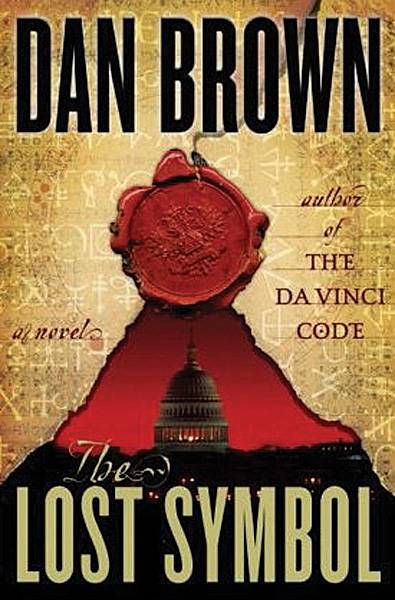
Sorry to be so abrupt, but I appreciate that this is a long review, and I appreciate that you might not finish it, and unlike some other book reviewers, I can’t in good conscience discuss The Lost Symbol without bringing up the ending. That’s unfortunate for Dan Brown, because the first 450 pages of his new thriller were a ton of fun. They were filled with all the elements that Brown fans (myself included) have come to love and expect: cryptic puzzles, fast-moving aircraft and dull historical locations made exciting.
But the ending sucked.
Or maybe it only seemed like it sucked; maybe if Robert Langdon, the seemingly omniscient professor protagonist from Angels & Demons and The Da Vinci Code were to read The Lost Symbol and peel back its layers, he’d discover that Brown didn’t drop the ball at the book’s end; he covered up the book’s flaws until then.
But they had to come out sooner or later.
Yes, professor of symbology Robert Langdon is back, and he’s still solving puzzles, and his dialogue is still stiffer than the Washington Monument: “This idea that there exists some kind of ancient knowledge that can imbue men with great power … I simply can’t take it seriously.” But the dialogue is par for the course—“the course” encompassing not only Brown’s earlier works, but also the genre in which he writes.
The Details

As flat as Langdon’s words sound, the professor has actually grown more human/less godlike in the past five years; it now takes him more than, oh, four seconds to solve a nearly impossible riddle. Langdon’s external life has changed, too, since his days running through the Louvre: “Ever since his experiences in Europe over the last several years, Langdon’s unwanted celebrity had made him a magnet for nutcases … Grail fanatics had followed the media coverage closely, some connecting the dots and believing Langdon was now privy to secret information regarding the Holy Grail—perhaps even its location.”
It doesn’t take a Harvard professor to see that Brown is talking about himself there. Ditto for this exchange between professor Langdon and one of his readers:
“My book group read your book about the sacred feminine and the church! What a delicious scandal that one caused! You do enjoy putting the fox in the henhouse!”
Langdon smiled. “Scandal wasn’t really my intention.”
Unlike The Da Vinci Code, The Lost Symbol won’t ruffle feathers, let alone cause a “delicious scandal.” The book’s featured secret society, the Freemasons, is politically benign. (Sure, some individual Masons hold political power, but their society membership is unconnected, substantively, to their politics.) Apparently Brown’s new villain, a transformation-obsessed, tattooed bodybuilder named Mal’akh, didn’t get the memo—he believes the Masons are withholding the secrets to the universe from the rest of mankind.
The Lost Symbol’s plot kicks off when Mal’akh kidnaps Langdon’s friend Peter. Mal’akh tells Langdon he’ll free Peter once Langdon solves the Freemasons’ puzzles and discovers their secrets. So Langdon and Peter’s sister Katherine (a “Noetics scientist” [i.e., a person who’s convinced herself that psychokinesis is a legitimate science and tries to convince others of the same {and probably will convince Brown’s less skeptical readers, given 1) the authority with which she speaks and 2) the reverence her brother Peter and, disappointingly, Langdon afford her}]) run around Washington, D.C., trying to solve Masonic puzzles.
Except for when they’re trying not to solve them. See, Peter (the guy Langdon is trying to rescue) told Langdon not to unlock the mysteries of the Freemasons, and Langdon wants desperately to respect his friend’s wishes, and Langdon’s ambivalence severely cuts into the book’s momentum. For example, look to this dialogue between Langdon and Katherine:
He stood poised, pencil in hand, and yet … strangely, after all this enthusiasm, he seemed to hesitate.
“Robert?”
He turned to her, his expression one of trepidation. “Are you sure we want to do this? Peter expressly—”
“Robert, if you don’t want to decipher this engraving, then I will.”
The thing that keeps The Lost Symbol moving is Brown’s implicit promise that in the end, a tangible secret will be uncovered (like the one in The Da Vinci Code about Jesus having a kid). Langdon keeps asking, are you sure we’re not speaking in metaphors here? Are you sure we’re dealing with something tangible? And everybody (Peter, Mal’akh, the CIA) keeps assuring him, no metaphors here; we’re being literal.
Quasi-spoiler alert: Langdon’s suspicions were well founded.
On a similar note, for a couple hundred pages, Mal’akh and the CIA insist the stakes couldn’t be higher, so Langdon (along with the reader) is led to believe that if he doesn’t solve the Freemasons’ puzzles, the world as we know it will crumble to pieces for some reason or other. (Or is it that will the world crumble if he does solve them? One of the two.)
Turns out the potential danger in question is something that could be fixed by a focused PR campaign.
When Brown got to the end of the story, I suspect he thought to himself, Oops! I haven’t made the stakes high enough, and I haven’t revealed a tangible secret. I’ve got to throw in something that will rival The Da Vinci Code in scope. And then, in an attempt to artificially raise the stakes, Brown throws a Hail Mary pass in the form of a Platonic dialogue about the nature of God. It comes off as ham-fisted and borderline preachy.
I said that I enjoyed the book’s first 450 pages, and I did. At the time. But the book left a bitter taste in my mouth that grows bitterer as time goes by. So here’s what I recommend: Buy a copy of The Lost Symbol, read the first 450 pages, and then throw the book away. Yes, you could try to think up your own satisfying ending, but if Brown couldn’t think of one—and believe me, he couldn’t—the odds are against you. No offense.


Previous Discussion: